The Destination Was Sydney

Sydney can help you leave the planet.
Which may be the first trip where fighting over the window seat is entirely reasonable.
Through Virgin Galactic, she can actually book it.
She can also tell you which hotel is worth crossing an ocean for, why no anniversary should begin with a five-hour layover, and whether Unearth belongs on a portrait-session playlist.
That last question was easier.
Unearth sounds less like “turn your chin toward the light” and more like civilization has been given nine minutes to evacuate.
That mix of style and surprise does not end with her music.
Sydney built Wandery Travel for people who want the kind of trip they’ll remember.
That might include a room you didn’t know to ask for or a dinner reservation that somehow exists when the restaurant is fully booked.
But access isn’t what makes Sydney good at this.
It is attention.
Ask where you should go, and Sydney asks what you hope to find when you get there: rest, wonder, adventure, or dinner without hearing the phrase “I’m not seeing it here” from someone holding an iPad.
That is where she starts.
Planning her portraits meant turning that question toward Sydney.
Her last professional photographs were from high school. Since then, she had started Wandery and outgrown those yearbook-era images.
She wanted elegance, warmth, confidence, and mystery, with enough personality to make people curious.
The mood board promised quiet luxury. The playlist disagreed.
When I asked what she wanted to hear that day, Sydney named Unearth, laughed, and reconsidered. We went instead with other favorites: Pink Floyd, Manchester Orchestra, and Rush.
I was born in Canada and spent years in Toronto, so Rush, at least, I understood. In Canada, not knowing Rush requires some explaining at the border.
Before she came in, Sydney admitted she was a little nervous and wondered if her sister Bailey could come for emotional support.
Of course she could.
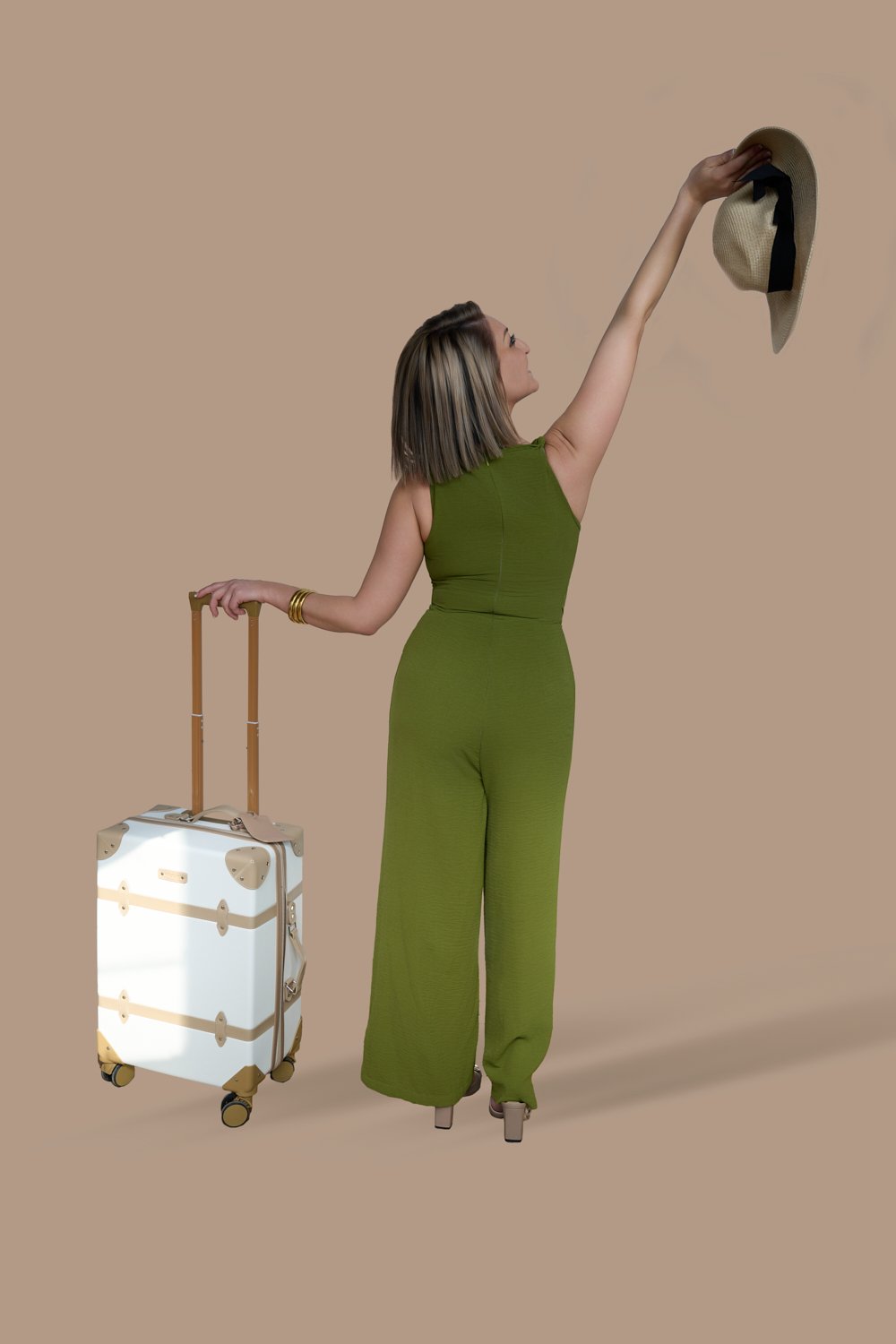
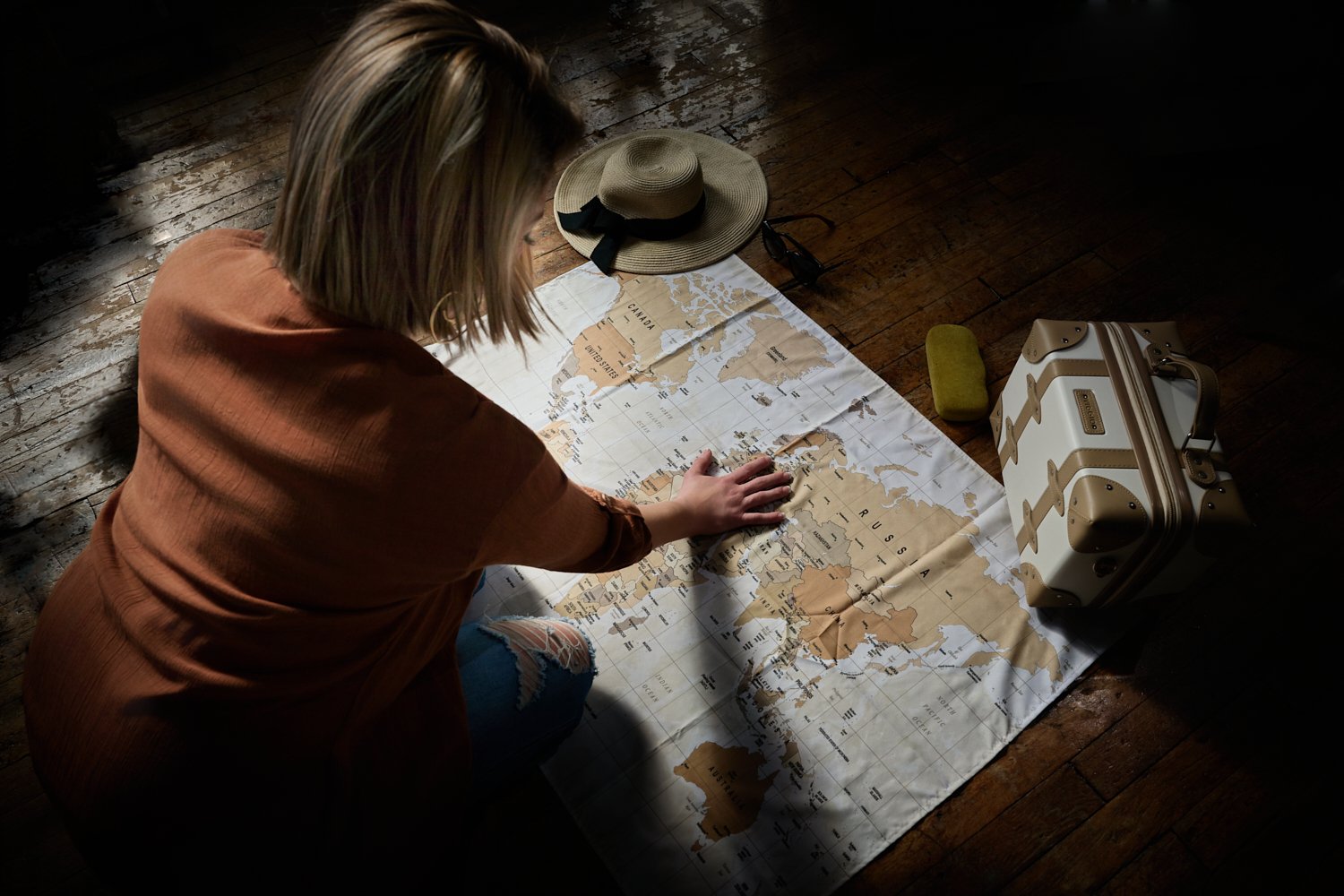
I asked if she was bringing props. She was. Along with their outfits, they arrived with vintage suitcases, a sunhat, and a cloth map that was far better at suggesting adventure than giving directions.
The nerves did not follow her inside. As Laura did her hair and makeup, Sydney settled in, joined the conversation, and let someone else hold the details.
Usually, Sydney is the one holding them.
Her work lives in travel’s invisible machinery: the driver waiting when you land, the timing that works, and the backup plan that never becomes your problem. Her clients get the view. Sydney takes care of what they never see.
The suitcases and map made sense now. For once, the journey pointed back toward her.
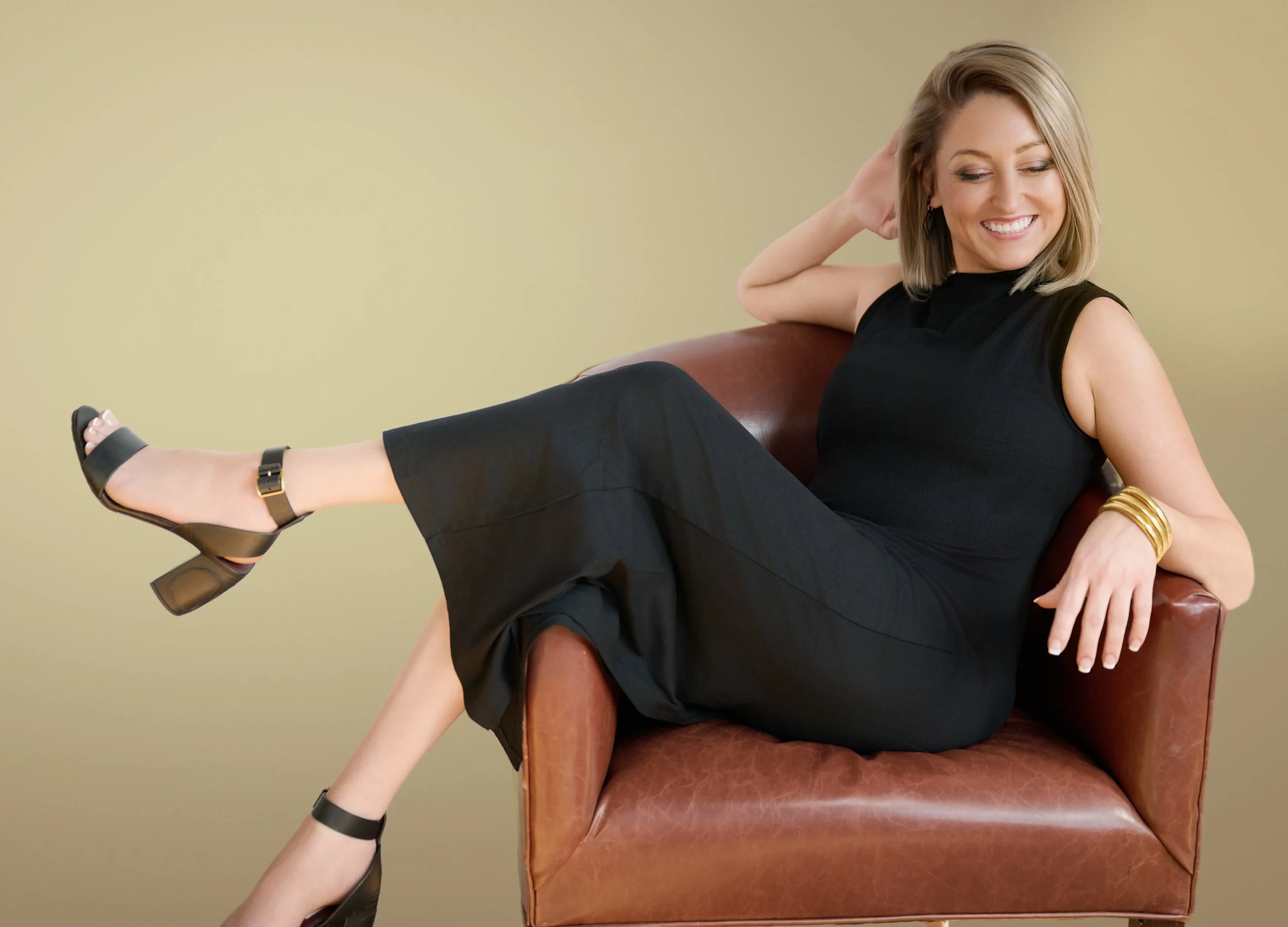
We started with the images she had imagined. In a black dress, she was poised and assured, though a thread of concentration remained.
Then Bailey suggested she turn sideways in the chair and drape her legs over the armrests.
Sydney looked at the chair.
Then at Bailey.
And tried it.
The dress was still elegant. Everything else loosened.
Sydney stopped thinking about how she should look and responded to the moment.
Bailey soon moved from emotional support to creative co-conspirator. I handed her the hair fan; Sydney’s hair sprung up, Bailey smiled, and both sisters made it about half a second before breaking into laughter.
That was the turn.
Sydney talked between frames, moved instinctively, and no longer anticipated the camera. The challenge was never getting her to smile. It was asking her not to.
Even her most serious expression survived only a frame or two before the smile returned without permission.
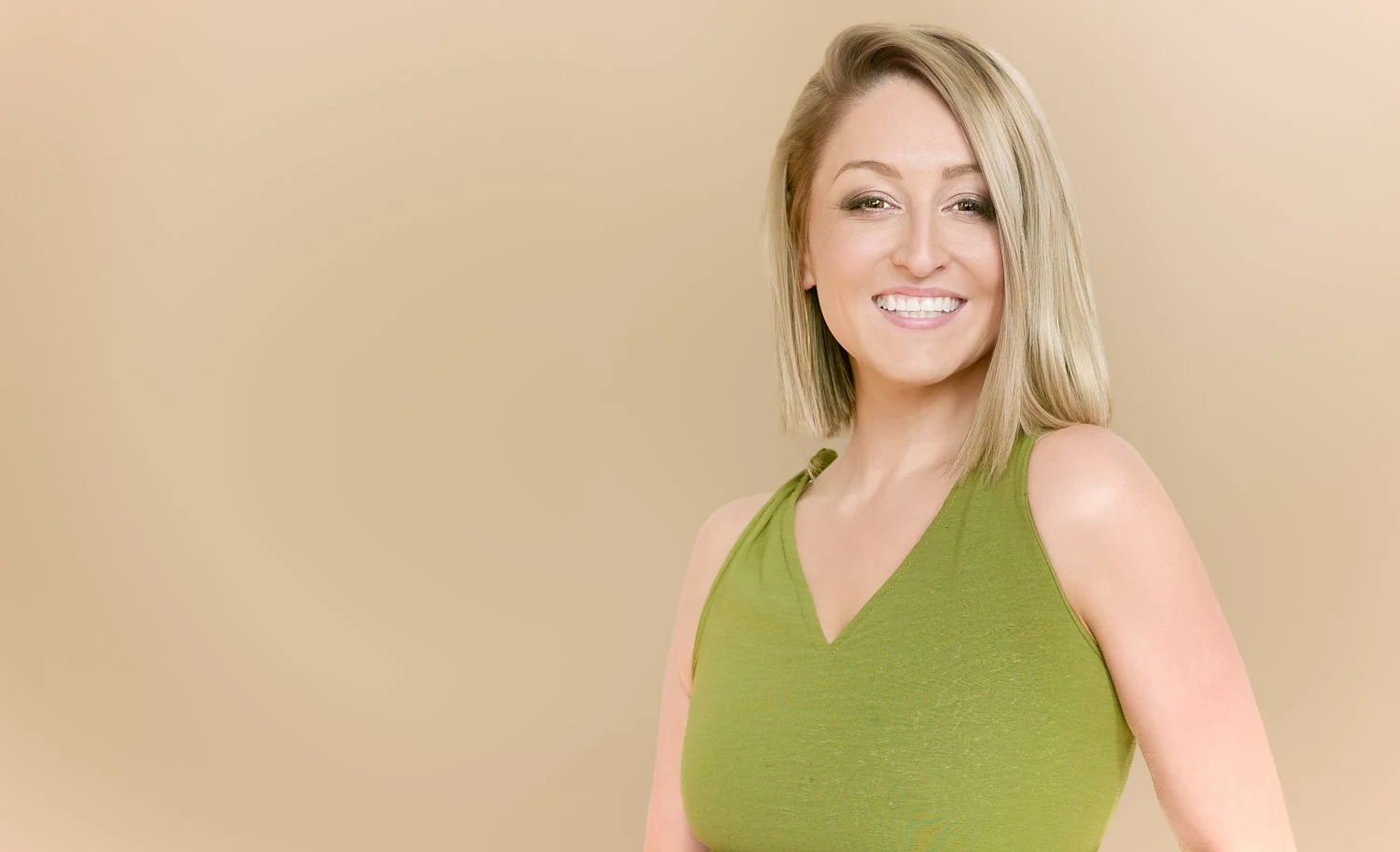
The ease came not from performing better, but from no longer performing at all.
That was when the portraits began to feel like Sydney.
The shift echoed a larger one.
Since childhood, going somewhere new had expanded Sydney’s idea of what was possible. The Grand Canyon made the world feel bigger. New York showed her a city inventing itself while she watched.
Then came the Amalfi Coast.
Somewhere along that coastline, travel stopped being something she fit around the edges of her life and began to look like her life.
She came home with a question:
What if travel did not have to remain the thing she loved on the side?
Wandery began there.
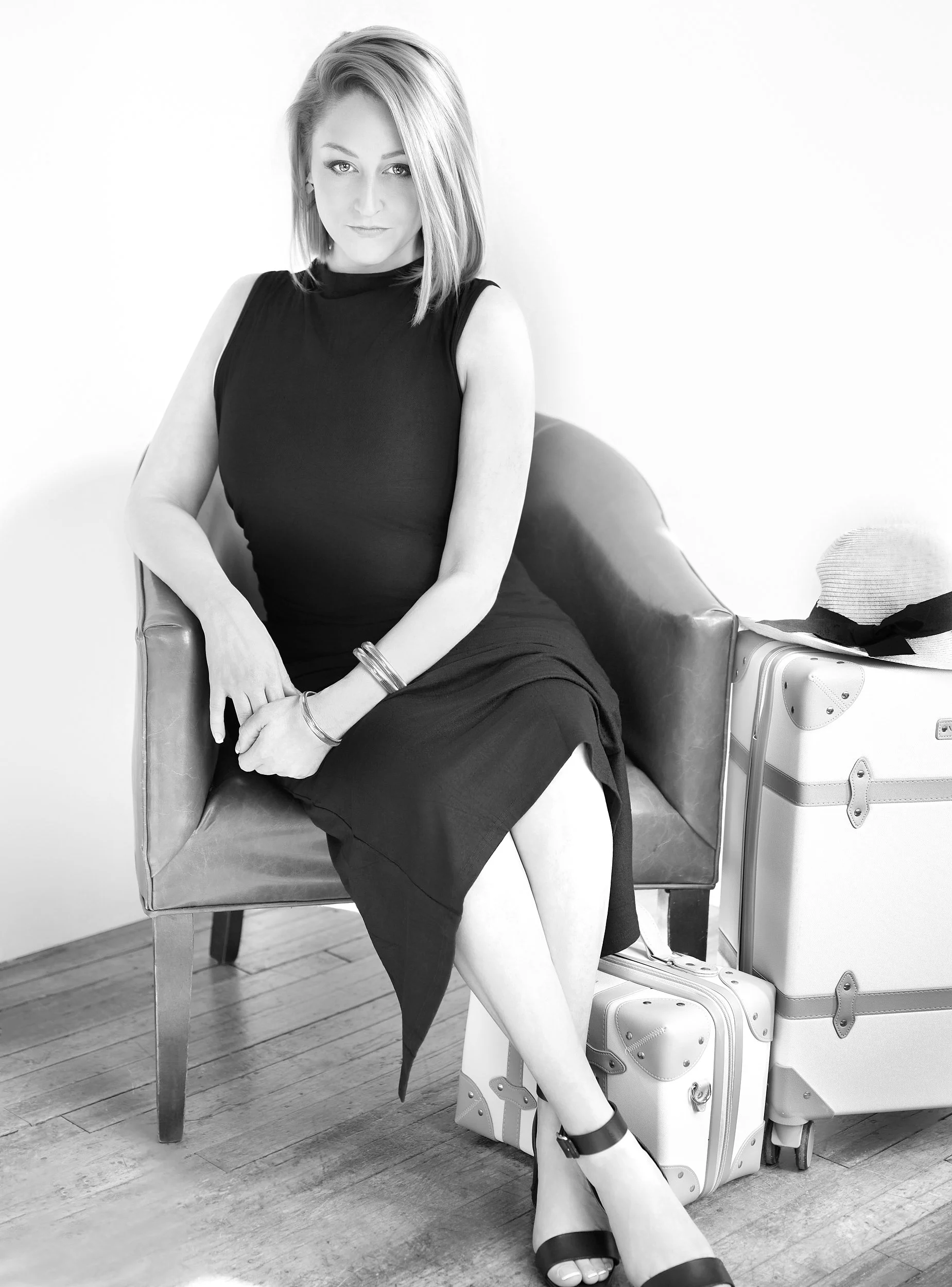
At the reveal, the photographs held more than one Sydney.
Bailey chose a serious portrait that made Sydney look capable of arranging transportation beyond Earth’s atmosphere. Their mother kept returning to the black-dress image: Sydney laughing, her legs draped across the chair.
Soon everyone had a favorite and a reason. We had an unofficial portrait-selection committee with no bylaws and several firm opinions.
But these were not competing versions of Sydney.
They were all true.
The woman who built a business from a question. The traveler who planned trips for a living and still wanted to take them. The sister who could be poised one frame and laughing with Bailey the next.
For one afternoon, Sydney was not planning someone else’s journey or making certain every detail was in place when they got there.
She only had to arrive.
The itinerary belonged to her.
And when the portraits appeared, we knew exactly where we had ended up.
The destination was Sydney.