Her Turn

Some people make conversation. Amy Nubson makes room.
She can board a plane alone and land with a new friend, three life stories, and an invitation to visit someone in South America.
Her husband, Avery, considers this both her superpower and a mild travel hazard.
He is not wrong.
The first time we spoke, it did not feel like our first conversation. There was no awkward warm-up, no careful circling, no polite opening act before we reached the real part.
We just started talking, and then we kept going.
That became the pattern.
We would set aside forty-five minutes for a call, and somehow it would stretch past an hour, sometimes closer to ninety minutes, without either of us noticing.
No natural break. No glance at the clock. No moment when the conversation quietly reached for its coat.
Time did not feel spent with Amy.
It disappeared.
That became the challenge of her portraits. We needed images that felt less like a brand presentation and more like a conversation you did not want to end.
Not a persona pasted onto a person. Not a stock version of confidence. Not laughter aimed at a blank wall as though it had just said something hilarious.
Amy was entering a more visible season. She was speaking, leading conferences, and preparing to launch Align Your Voice: The Stories We Tell Ourselves and Others.
She needed images for her work with Nufire Collective, her podcast, and Women Getting Visible.
More than that, she needed portraits that felt like sitting across from her.
Grounded enough to hold the room.
Open enough to invite someone else in.
That same instinct shapes the company she and Avery built together, helping entrepreneurs get clear about their message and share it with the right people.

Amy listens for what is true, especially when someone’s message starts losing confidence.
“I’m just a coach.”
“I’m just a small-business owner.”
Then come descriptions so broad they sound like a mission statement and a scented candle wrote them together.
Amy can hear when the words sound good but say almost nothing.
She hears the unnecessary “just,” the description anyone could use, and the polished sentence filled with business language but missing the one thing that makes a person worth remembering.
So she keeps listening.
Until the real person shows up.
That was the contradiction.
Amy made it easy for other people to open up, yet spent years keeping herself just outside the frame.
“I was terrified of public speaking and being seen,” she told me. “I loved showcasing other people’s voices, but not my own.”
Then Christina Vidovich noticed Amy on LinkedIn and did for her what Amy had done for so many others.
She saw her.
A podcast invitation became a speaking invitation. The speaking invitation was at the first Women Getting Visible conference.
And somewhere along the way, collaboration became partnership.
Together, they create spaces where women can step forward as themselves, not as edited versions of who they think the room will accept.
That matters because visibility sounds wonderful in theory.
Then your name appears on the program, someone hands you a microphone, and suddenly it becomes very personal.
That was the heart of our design consultation.
We were not trying to fit Amy into a brand.
We were building the images around the woman herself: the listener, the speaker, the storyteller, and the person who had spent years helping others find their voice and was now letting her own take up more room.
On shoot day, Diane, our hair and makeup artist, refined Amy’s look without changing who she was. Kitty moved through the studio with her usual calm focus, helping with the details and making everything feel easy, even when a scarf situation briefly required diplomacy.
Amy had brought meaningful pieces of her life with her.
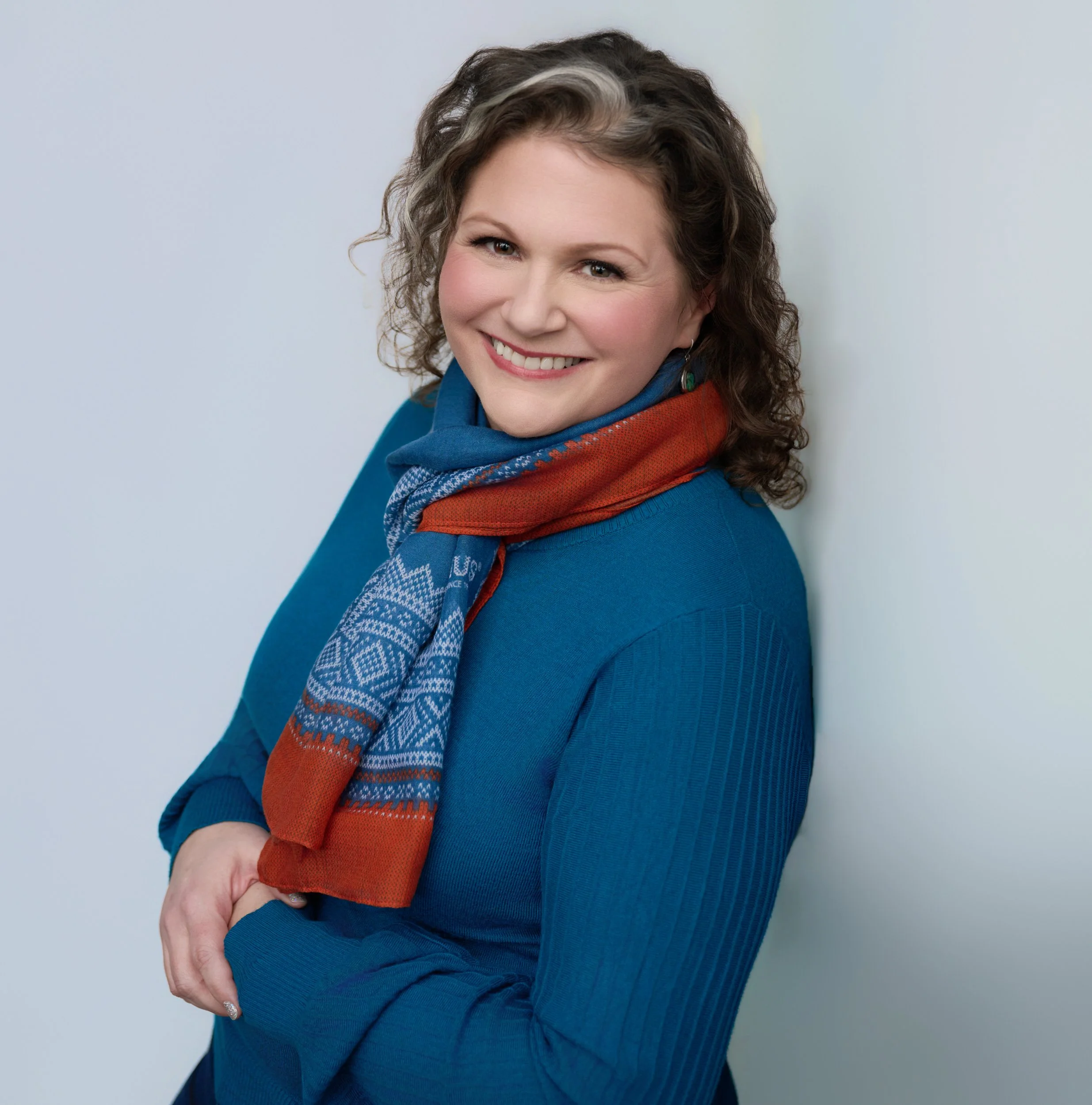
A scarf from Norway. Her grandmother’s pin. A retro microphone for the podcast images.
None of it felt added just for the sake of styling. Each piece carried something: heritage, courage, voice. These were small details that helped tell the story without trying too hard, and once the scarf was in place, it brought a sense of history into the room.
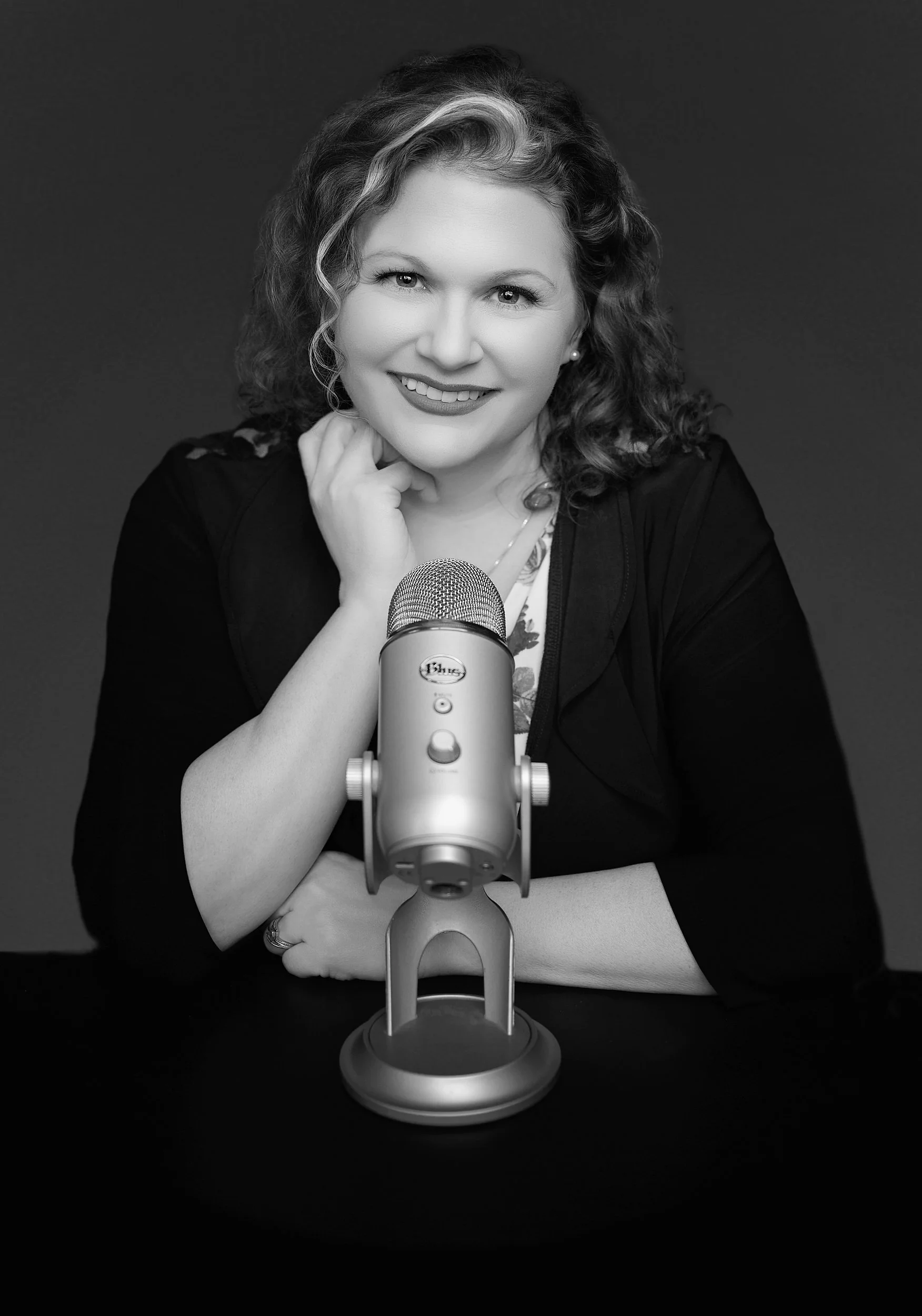
There was softness in the fabric, strength in the pin, and a little old-radio energy in the microphone, as though regular programming might be interrupted by a bulletin about women becoming dangerously visible.
Her podcast had not launched yet.
Her voice had.
The microphone pointed forward. The camera reached back.
Years earlier, Amy’s sister got into photography and often used her as a model, giving Amy plenty of practice standing near windows and discovering the seventeen or so ways a person can apparently do that incorrectly.
Years later, when she stepped in front of my camera, her body remembered.
Her hands settled. She met the lens without forming an internal committee to investigate her shoulders.
But the camera saw more than muscle memory.
She was not trying to become camera-ready.
She had already arrived.
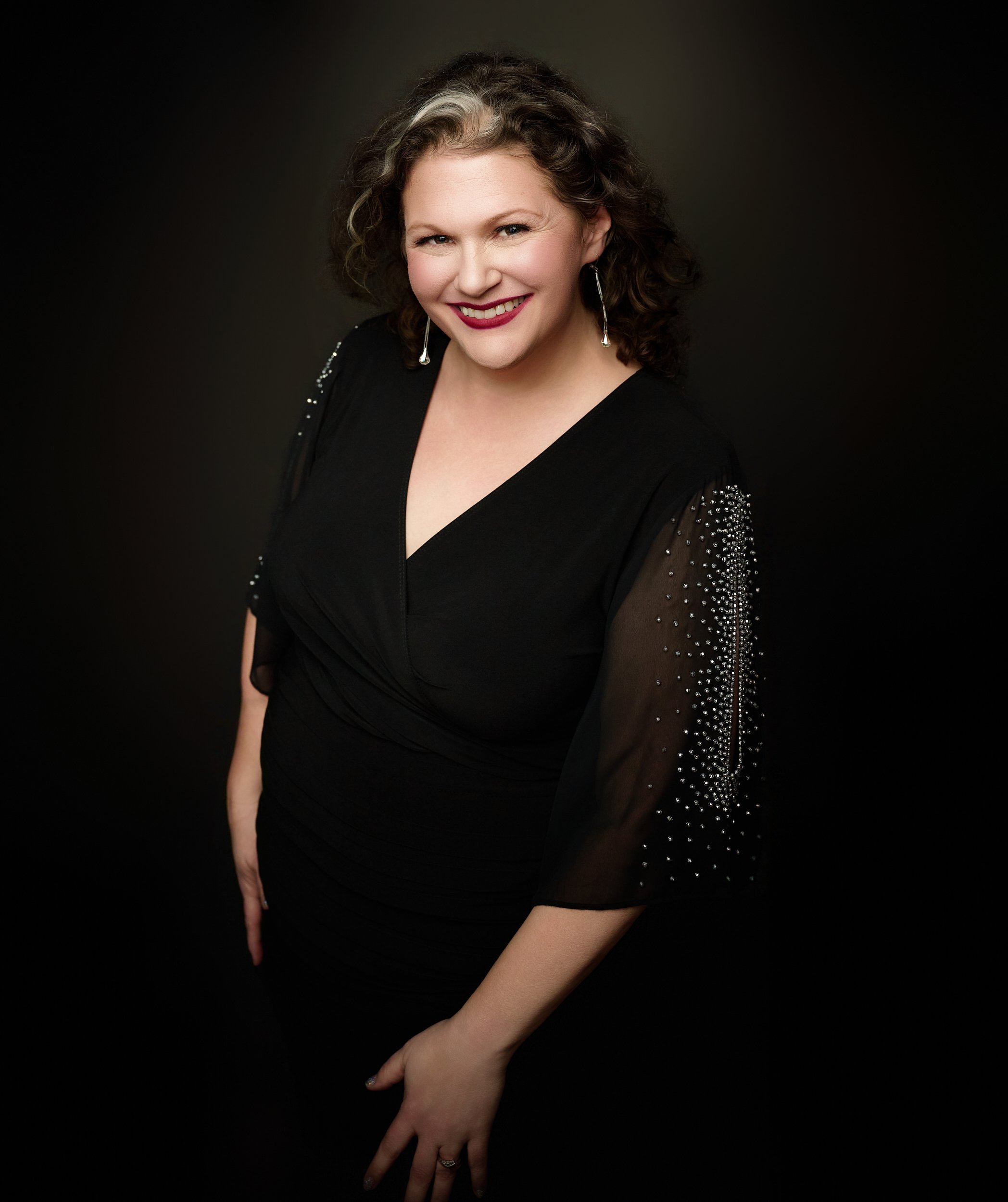
For her final look, Amy returned in an elegant black dress. I asked which song from her playlist she wanted to hear.
She smiled.
“This Is Me.”
No one in the room was surprised.
As “This Is Me” from The Greatest Showman filled the studio, Amy did not perform the song or borrow its confidence. She stood there, present, certain, and fully visible.
For years, Amy helped other people step forward, speak clearly, and take their place.
In the studio, she gave herself the same permission.
The camera was ready.
And this time, so was Amy.
It was her turn.